The Novice Survivalist
A novice outdoorsmen learning camping, fishing, bushcraft and survival. "KNOWLEDGE IS A SURVIVAL SKILL"
Do I really need all these survival “gizmos and tools” and other stuff…..
Hello to all. Well now that I have finally started to get me feet on the ground in the new play ground…..Minnesota. I went on my first Kayak camp. Playing safe I went to a small State park not to far from home. Rice Lake State park. Its more of a walking, hiking , car camping park. Although they do offer 5 kayak/canoe paddle in sites. The lake was very shallow and kept that way to help the wild fowl in the area. Don’t get me wrong I really enjoyed my overnight camp. It was fun, as any camp trip for me is. Anywhere in the out doors makes for fun.
However once again I had issues with the way my Kayak performed when loaded up. Granted a Hobie Outback is really designed as a fishing kayak it can hold a lot of gear. Its naturally a slow wide stable kayak.

That’s why I bought it. Looking at pictures from the trip I noticed how overloaded I am. This was an over nighter. It was packed to the hilt. I seem to have gone back to over kill again. I need to slim down. No not me, what I carry on my kayak trips. This is also going to affect walk in camping which I plan to start doing, now I am in Minnesota. Minimal is the word. Well not absolute but as minimal as possible. This is my new mantra…”Minimalize as much as is possible while being as safe as possible.”

This means taking a look at survival/emergency gear I am carrying. As well as the other “normal camping stuff” I carry. I need to look at my walk in packs and my kayak packs dry bags etc. I currently carry when camping.
So new task coming up.
- minimalizing my kayak camp equipment
- Minimalize my walk in camp equipment
I will have to pull out each dry bag, pack, stuff bag etc. and go through them one at a time to remove any culprits that’s really don’t need to be there. Size and weight being what I am looking to get rid of. So off to pull out the “Gizmos and tools” I seem to have so much of, and start whittling down. Stay tuned.
Remember knowledge is a survival skill.
The Novice Survivalist
A new look at My Camping Equipment and other Big Changes
Source: A new look at My Camping Equipment and other Big Changes
Latest Blog post. Its been awhile read and find out why. All very exciting for me.
TNS
A new look at My Camping Equipment and other Big Changes
Welcome back campers.
Sorry been a little busy with life. Most of you will have noticed I have relocated to Minnesota. Big change for me, Although so far I have found Minnesota very welcoming. Lots of outdoor activities here.
I will certainly have to pick up my game in the outdoors. New things to learn and see.
Couple of new tasks I will have to set.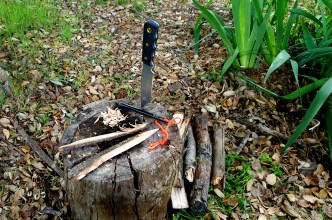
- Get to know my new play ground
- Learn rules and regulations for Mn
- Change my camping patterns and methods
- The BIG one for me is to plan on a true bush crafty camp in the national forests. something I have always wanted to do.
- Make the necessary changes to my equipment nd mind set for camping and the outdoors in MN.

Check out my first video from MN.
Obviously there is a big difference from California to Minnesota. I now need to make sure I am prepared for the Minnesota outdoors……They have seasons here. California not so much.
The big one WINTER, Camping and other outdoor activities.
So a new adventure begins. Join me in my learning Minnesota outdoors and safety and survival. Camping, fishing and Kayaking.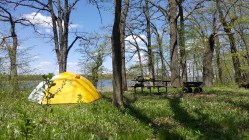
Don’t forget to stop by the Recourse page to see all the new Videos I have added. See the section welcome to Minnesota 2CG.
Enjoy and remember to subscribe to my You Tube Channel for up dates to Videos I add.
Knowledge is a survival skill. Never stop gaining yours.
The Novice survivalist
Updates to Blog and Resource page on my website
Just added a new Video on tarp setups to the resource page. Also new blog up date on the 10 C’s check it out. NS
Canvas Needle. The last of the 10 C;s
Although a play on words, A Canvass needle is more than likely to be replaced by a small modified sewing kit. What for you ask. Well lets look at some needs for a sewing kit.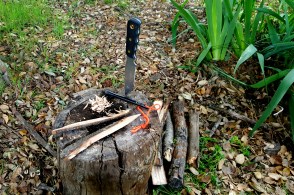
- Clothing repair
- Cover repair. ( Tarp tent etc.)
- Medical use
- General item repair
Looking at this list I can see why it is the last Item on the 10 C’s Of survival list. It has limited use but would be handy to have. Simply being able to repair or modify your clothing would be the most obvious use. Having a number of different sized needles as well as suitable thread is a must. Using a standard sewing needle and thread to repair some heavier material than your average clothing is not going to work.
A good kit should have at least this
Some Utility Cord
Duct Tape.
Brass wire
Needle Holder
Assorted Needles
Heavy Duty Straight Pins
Assorted Buttons
Assorted Safety Pins
Heavy Duty Nylon Thread
Needle Threader
Metal Thimble
Durable Waterproof Patch’s
Hopefully a kit that contains these Items will get you through a basic repair. remember all your emergency items are really based on a 72 hour survival situation. The 10 items in the list will certainly get you through.
Next up a look at my Emergency kit I have developed over the past couple of months. Although not really a separate kit. It is part of my camping kit. Simply integrated to make for easy access and all in one kit. Depending on your situation and survival scenario the emergency kit may be separate. Or there are multiple kits for a group situation. For me having my Back pack for camping integrated with my emergency kit items works for me.
Although we have basically covered the 10 C’s I will continue to add posts on my learning more. I am sure , In Fact I know Ill be changing the items, either to replace or improve the item.
Remember to regularly check your kit for wear and tear. Some items may need to be maintained regularly (Cutters) or replaced . (Expired food items, etc.)
As always
Remember .
Knowledge is a survival skill. Keep up to date.
The Novice Survivalist
Dirt time 9- Cargo Tape
Source: Dirt time 9- Cargo Tape
This is number 9 on my list. Check out my site on my learning some basic survival skills. Maybe you will learn something too.
Dirt time 9- Cargo Tape
This is one of the “not really required” items on the 10’Cs of survival list. However its a very versatile item to have in your bag of survival tricks.
Cargo Tape, number 9 on the 10 c’s list, also known as Duck Tape or Gorilla tape or 100MPH tape. What ever you call it is one of the multitaskers in the survivalists bag of goodies. Very strong and durable tape. It has many uses for the survivalist. There at lists and lists on the web about uses for Duck tape.

Not all pertain to survival, but I have seen survival lists that have 50 uses for Duct tape. Some are a stretch, some trivial, but some are very useful. Personally for me Tape has 3 main uses. For my planning which is to get home from a emergency scenario while out solo camping.
Having said that, I do have 3 different bags/packs for different things.
- My kayak solo camping emergency bag. Its small enough to fit into my kayak and is really designed for a 71 hour situation. (See my video on I got tagged on my You Tube channel.)
- My EDCC, everyday car carry bag. With me when I am at work or driving any distances.
- And my back packing setup. Which is a bigger back pack , which has all my camp items, plus survival kits. Really a longer than 72 hour pack. ( actually just a nice big bag to keep all my camping stuff in. Convenient to just grab and go should I decide to camp, with out my Kayak.)

Back to tape. For me the uses include
- Patching, Repairs to my Kayak, Tarps, Tent, clothes, sleeping bag etc.
- Make shift tying. By cutting the tape into long thin strips and doubling over. ( long side) it can be used to tie up shelters, wood or any items you may need to bundle or tie together.
- Medical kit, Can be used to hold a cut together, used to make a splint.
As you can see here is just 3 simple uses I would use tape for. As I mentioned above, a quick look /search under uses for duck tape or survival uses for duck tape will give a multitude of uses. You will be surprised.
Till next time, Number 10 …Canvas needle, sowing anybody…
Stay safe, be prepared and remember
“Knowledge is a survival skill.”
Novice Survivalist
Dirt Time 8 – Compass
Source: Dirt Time 8 – Compass A basic tutorial on using a compass
Dirt Time 8 – Compass
We all know we need to be aware of the region in which we have decided to either “bug out to” or get to in a survival situation. Having a Map of the area, marked out with the location and route to get there is part of the plan. During the planning of your “get to safety”, you should at the very least have a map of the area. Great!.  But what about unforeseen situations arising and your route is blocked for some reason or another. Navigating around in the wilderness or in an urban area should be a skill every novice survivalist needs to master. OK not master, but at least have a firm grip of the basics. We are not talking about celestial navigation, We are talking about using a compass and a map, to get you to a location you feel is a safe haven. Be it Home, or a predetermined rendezvous point with the rest of your survival group.
Your well thought out , pre planned safe haven route, has just turned out to be not so safe. Now you have to get to another point or deviate from your original planned route. (Hopefully your plan includes a backup point you have in your “get out of here plan.”) Getting there may require you to be able to navigate by compass as roads, paths etc. maybe unsafe travel lanes. In my case I would be planning to get back to my base or nearest safe haven in a personal emergency. I need to know how to navigate by Compass. Understanding this requires me to use the #8 C in the 10 C’s of survival. The compass.
As we plan our survival strategy we must always take into consideration the ever present “Murphy’s Law”. If it can go wrong it will. We cannot plan for every scenario, But we can be as prepared as possible to deal with it. The Compass is a great under utilized tool. The word navigation has all sorts of effects on the average Joe. “I’m not a sailor”, “I don’t know how to use a compass”, “There is no water within 100 miles of me”, “where is north”, and many other thoughts go through our mind. Well Ok my mind. To tell the truth, Compass navigation is not my strong point. I struggled with it, in my time in the Military, and that was 30 years ago. When I was reasonably smart. Now…Not so much. What I learned in the Military, I have long forgotten. It’s time to renew that acquaintance. So without further ado. Here we go.
The Compass:
From Wikipedia: I quote ……
‘A compass is an instrument used for navigation and orientation that shows direction relative to the geographic “cardinal directions“, or “points”. Usually, a diagram called a compass rose shows the directions north, south, east, and west on the compass face as abbreviated initials. When the compass is used, the rose can be aligned with the corresponding geographic direct………” OH GOOD LORD!. That was a mistake.
Here, hopefully this will make you (me) feel better. A picture of my Compass.
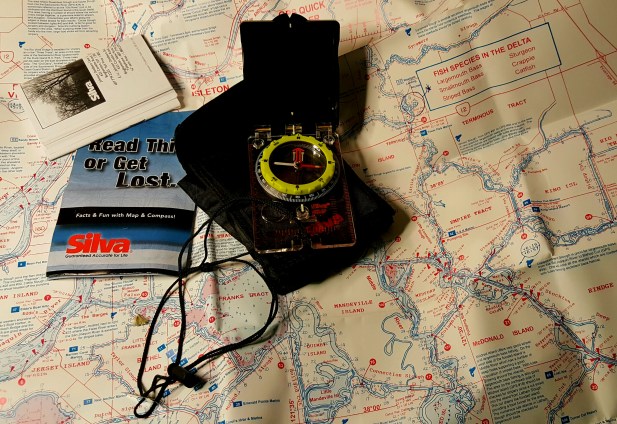
Ok!, Now we have a compass. However before we go on our little Navigation learning trip.
(NOTE: First and foremost. If you find yourself in a “lost” situation. Be prepared to admit it. Understand you are lost. DO NOT PANIC. Yes I have said this before and it especially applies to this scenario. You need to have a clear head to be able to navigate. It requires you to think clearly. Panic will distort your thinking. You will doubt the compass bearing, you can become very disorientated and make a bad “lost situation” even worse. Take the time to settle your thoughts. Then begin the process.)
There are a few things we need to be clear on. These are the navigation knowledge points we need to know and be comfortable with. They Include:
Understanding how to read a map. Every good topographic map should have minimum information on it.


A typical map legend and A hand draw map I did after scouting a area I planned to go into. The map shows North arrow and you can see I aligned the North arrow with the North pointing arrow on the compass. Very basic map, but better than not having a map at all.
- North arrow
- Scale
- Legend
- Declination angle
These should be on any “Good” map of an area.
Use of a Compass. (One that meets a minimum requirement.)

- Magnetic needles. Points towards Magnetic North
- Azimuth Ring. ( North, South, East and West. With degrees for 360. (2 deg increments best)
- Base plate
- Dog House. (Orienting arrow)
- Orienting lines (Declination lines)
- Optional items (Not necessary but handy). Magnifier, scale on side of base plate, Mirror, luminous dials and needle and Declination adjustment.
Typical nomenclature used in determining a bearing. (Navigating)
Magnetic north is actually the true north a compass will point to. However because the world is round and maps are “flat”. we need to adjust for this difference. This is called declination. All good maps will give you the declination of the map.  If you are going to be plotting a long distance to travel, you will need to take this change into account. Relatively short distances will be less affected by this.
Dog House is a term used for the orienting arrow on a compass. ( I believe it comes from the fact that the arrow typically looks like a drawn dog house)
Azimuth Ring, this is the moving ring around a Compass, that has the points of a compass. North, south, east and west. North west etc. etc. It is marked in degrees and there are 360 Degrees in the complete circle.
Orienting lines, These are lines on your compass that assist you in adjusting for declination.
The basic process is listed below.
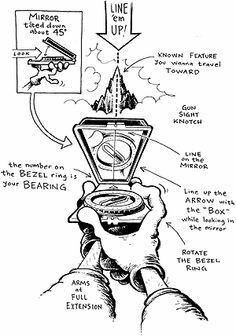
- Orient your map so the north arrow on it points north.
- Determining as precisely as possible you location on a map you have. (Using landmarks)
- Determine where you want to go to, on the map.
- Determine the direction you will need to move in order to get to that location
- Using this direction use the compass to keep your bearing.
- Move in the direction the compass guides you until you get to your destination.
Now to be honest, I have tried to put the whole process into words. A number of times to no avail. Its very confusing. So I will send you to a Compass video on one of my favorite You Tube channels. (NOTE: Survival on Purpose is a great resource. There are many videos on survival skills and reviews on tools you may be interested in. I really like his under $xx.xx videos which gives you ideas for items you might need in that price range). I know its the easy way out. However I would rather you see the correct easy to understand process, than my confused written explanation. And I consider this channel one of my “Go To Experts” for this kind of information. Should you find this channel help full please subscribe and support a great resource. A link to Bryan Stevens channel can be found under Survival on Purpose on my resource page, under Links to You Tube survival sites.
I highly recommend you become familiar with the area you to plan to go to. Scout it out. This becomes especially important in a Urban situation. Being familiar with easily recognized landmarks is half the navigation. Streets, Roads and highways travel in certain directions. Large prominent building or structures should be marked on the map to help in Urban navigation. Being familiar with them will make your task that much easier. Scouting a wilderness location is just as important. Maps are a general layout. But in real life, Mother nature changes regularly. Keep current with your location.make sure to visit the area on a regular basis, and update your maps for future reference.
I hope to have my own video soon for you to get confused with. But in the mean time lets use an expert source to get us going in the right direction.
Remember “Knowledge is a survival skill”
Even if that knowledge means referring to an expert
Until next time. #9 Cargo Tape.
The Novice Survivalist
 The Novice Survivalist